Every job below is one we do ourselves across Olive Branch.
We frame new decks with pressure-treated pine or steel ledger connectors, sized to your actual load, not a generic span chart. Footings go below the frost line, and every post sits on a poured concrete pier, not a paver block. You'll get a written layout before anything gets cut.
Multi-level decks, built-in benches, pergola tie-ins, we draw it out before we build it so you can see stair placement and railing height ahead of time. We'll tell you if a design idea fights against drainage or your home's roofline.
Soft boards, wobbly railings, and ledger boards pulling away from the house are the three calls we get most. We can usually replace a section of decking or re-flash a ledger without tearing the whole structure apart. If the joists underneath are rotted, we'll show you before we replace them, not after.
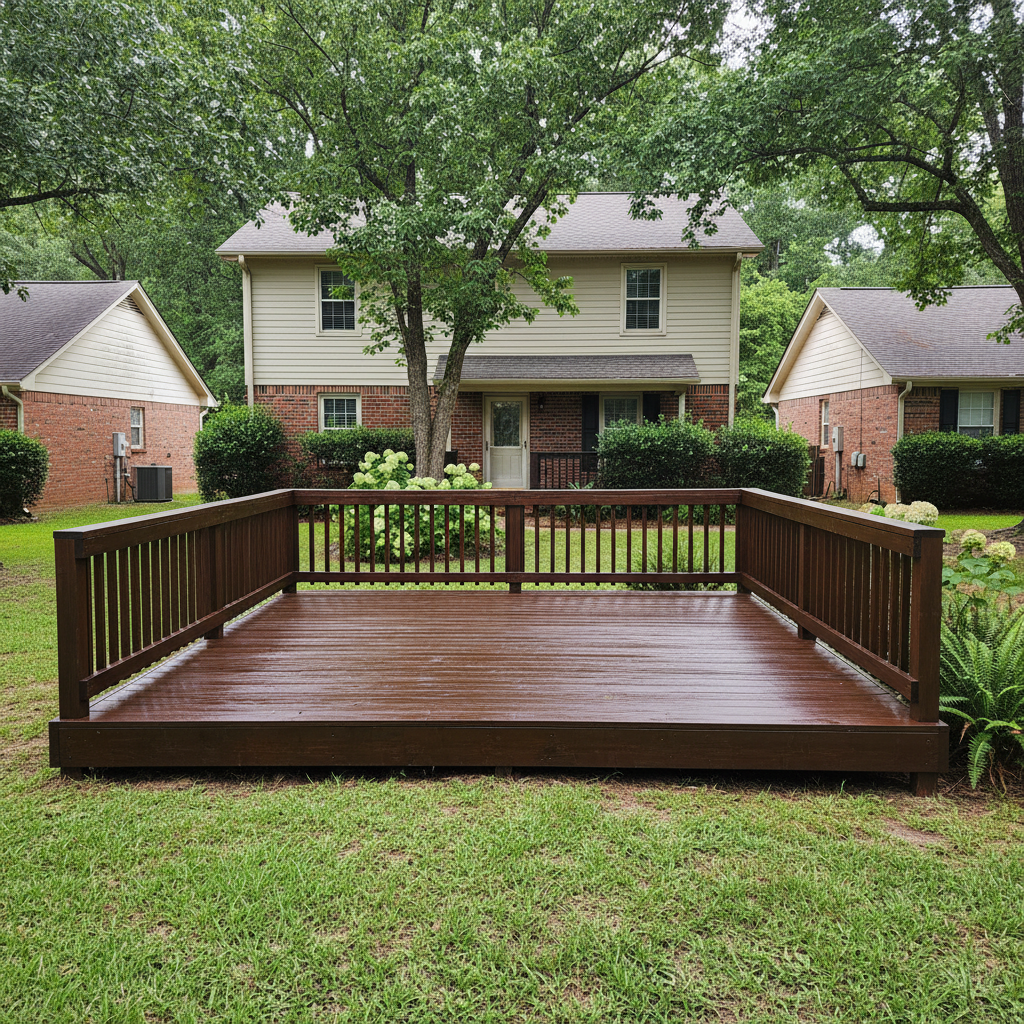
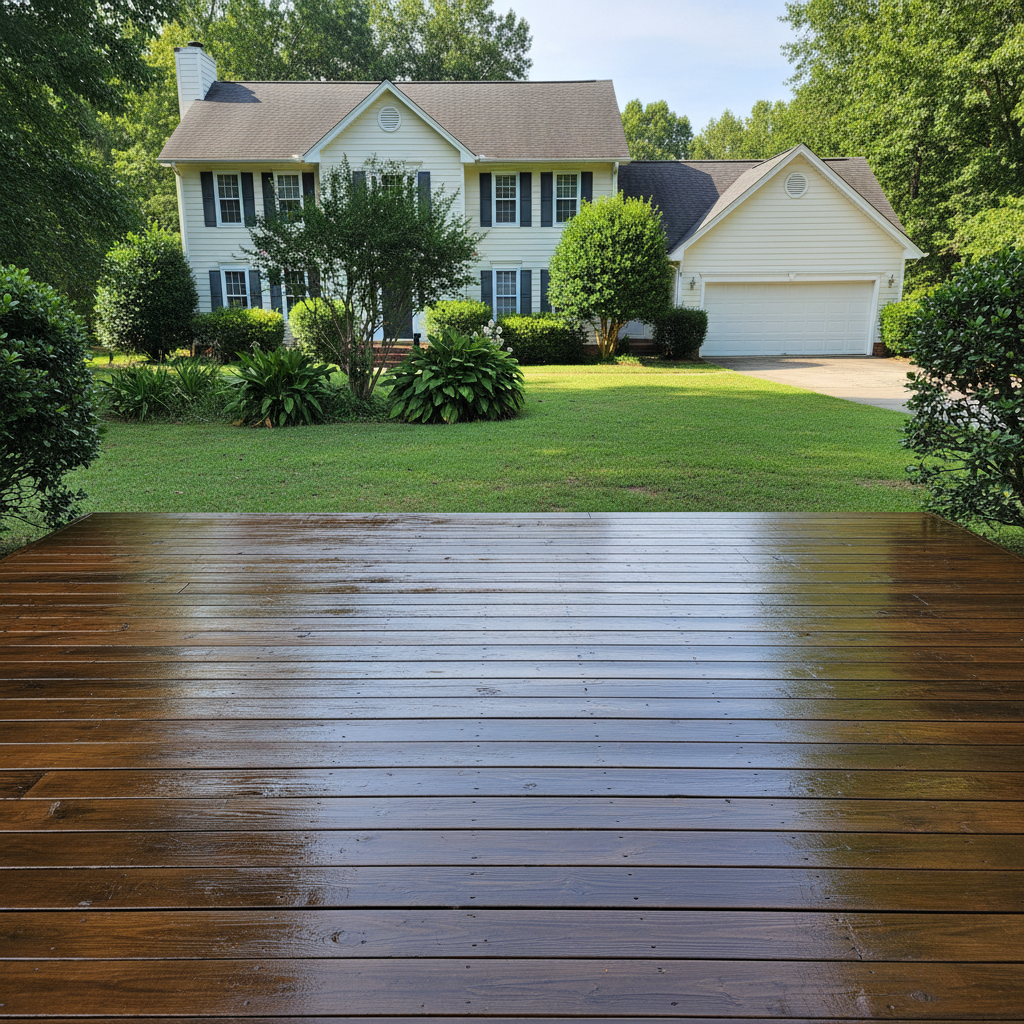
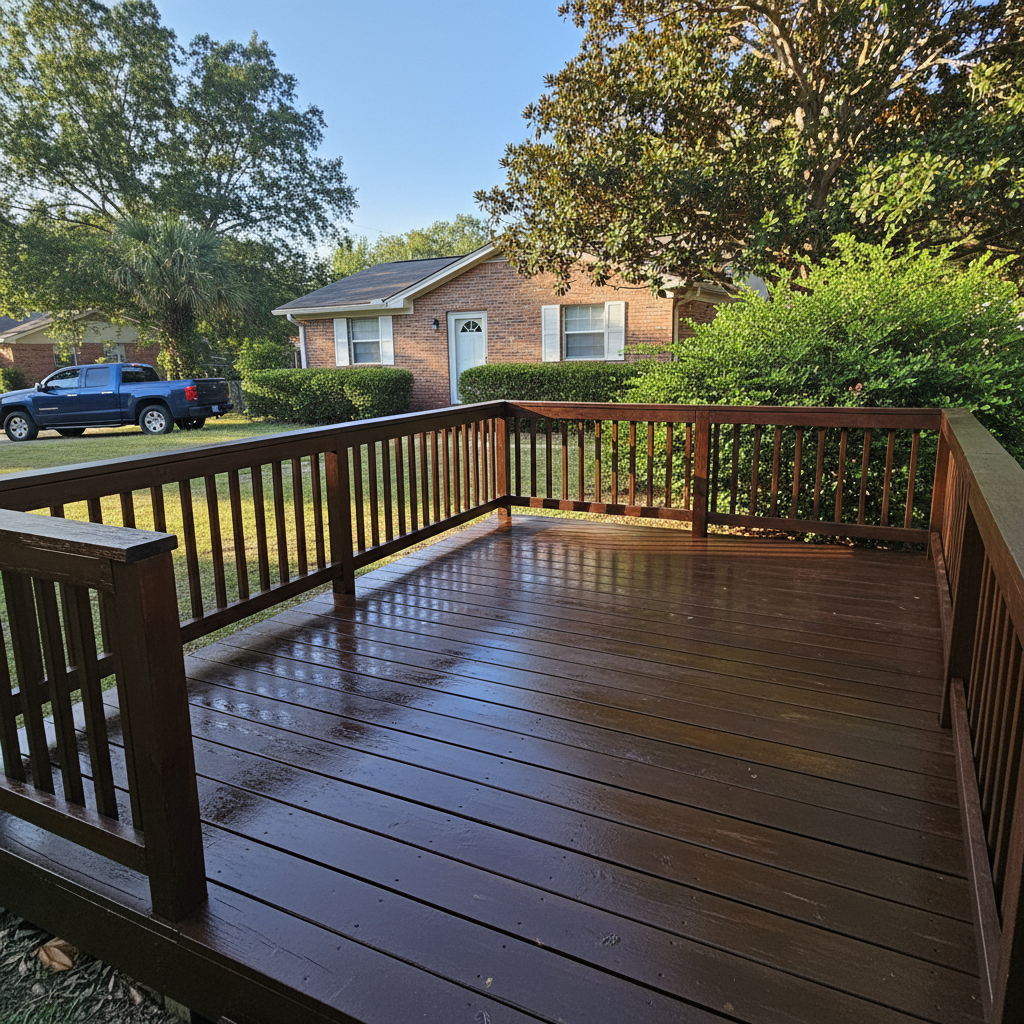
We pressure wash, let the wood dry out fully, then apply a penetrating stain or sealant rated for ground contact where it touches posts. Skipping the dry time is the single biggest reason stain jobs fail early. We recoat on a schedule that matches sun exposure, not a flat calendar date.
Composite boards expand and contract more than wood, so spacing and fastener choice matter more, not less. We use hidden fastener systems on most composite jobs so you don't see screw heads across the whole deck. It costs more up front and skips the annual staining.
Loose balusters and railings that flex when you lean on them usually mean the post is under-anchored, not that the railing itself is bad. We rebuild railing to current code height and baluster spacing, which matters if you're selling the house later. Wood, cable, and aluminum railing all get installed differently, so we price them separately.
If your frame and footings are still solid but the decking boards are cupped, splintered, or gray, we strip the old boards and install new decking on your existing structure. It's a faster, cheaper path than a full rebuild when the bones are good.
We frame screened porches onto existing decks or build them as a standalone structure with their own footings. Roof tie-in and flashing are the parts that go wrong most often when this isn't planned right from the start.
Old decks come down board by board, with nails and screws pulled or cut flush so the debris haul-off doesn't leave anything behind in your yard. We'll check whether your existing footings are reusable before we price a new deck on the same footprint.
We build freestanding pergolas or attach them to an existing deck frame, with posts set in concrete deep enough to handle wind load. Good for a spot that gets direct afternoon sun and needs shade more than full roof coverage.
Four steps, and no surprises in any of them.
You tell us what you want doing, we look at what is actually there, and we ask the awkward questions early.
In writing, itemised, free. If something might add cost later we flag it now rather than at the end.
Same crew throughout. We cover your floors, keep the dust down and tidy up before we leave each day.
You point out anything you are not happy with and we fix it before the invoice, not after.
These are the towns where we're regularly pouring footings and framing decks.
Common questions once a deck project is actually underway.
Describe the problem and we will tell you what it probably is. No obligation.